Raising the Stakes: The Importance of Progressive Complications
Is the complexity of your external conflict growing throughout the narrative, or does it just keep repeating with slight changes?
Progressive complications are one of the most reliable indicators of narrative momentum. The term comes from the Story Grid method, and the textbook definition is a raising of the stakes by forcing your protagonist to make escalating, irreversible choices. In other words, things get worse for your protagonist as they pursue their goal on the page. No matter what they seem to do , they can’t quite get what they want. Challenges emerge from the Inciting Incident, gradually narrowing the protagonist's available choices, culminating in a critical decision at the Turning Point.
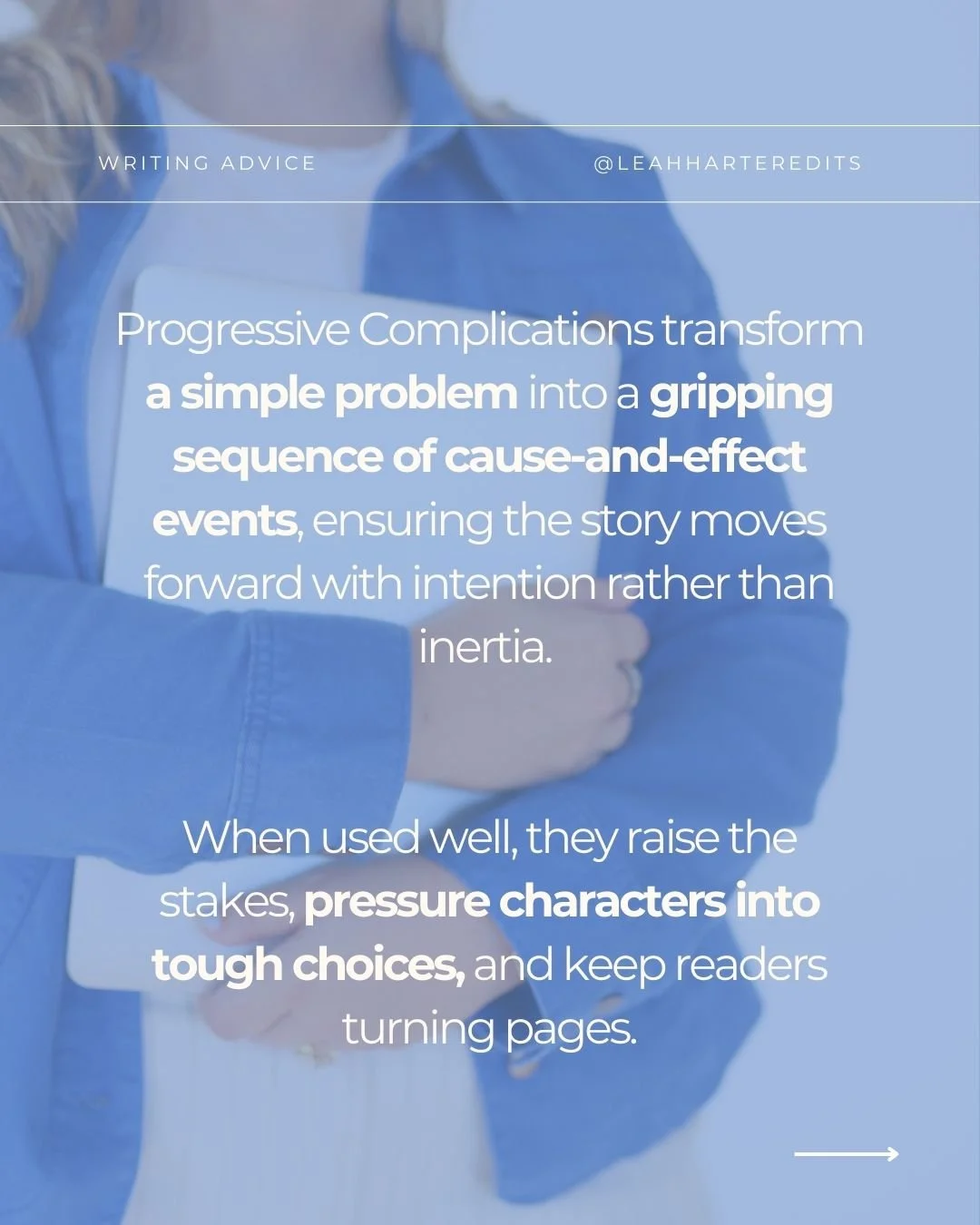
Progressive Complications transform a simple problem into a gripping sequence of cause-and-effect events, ensuring the story moves forward. When used well, they raise the stakes, pressure characters into tough choices, and keep readers turning pages.
This post explores how progressive complications work, why they matter to story structure, and how to use them as a diagnostic tool when revising a draft that feels flat.
What Is a Complication in Storytelling?
A complication is an obstacle that gets in the way of the protagonist’s goal and forces action. In strong storytelling, a complication is not simply hindrances in your character's path—it disrupts the plan established by the inciting incident and demands a response.
Complications matter because they create motion. Without them, a story may contain conflict, but it won’t progress in a meaningful way towards resolution.
Why Every Story Needs Meaningful Obstacles
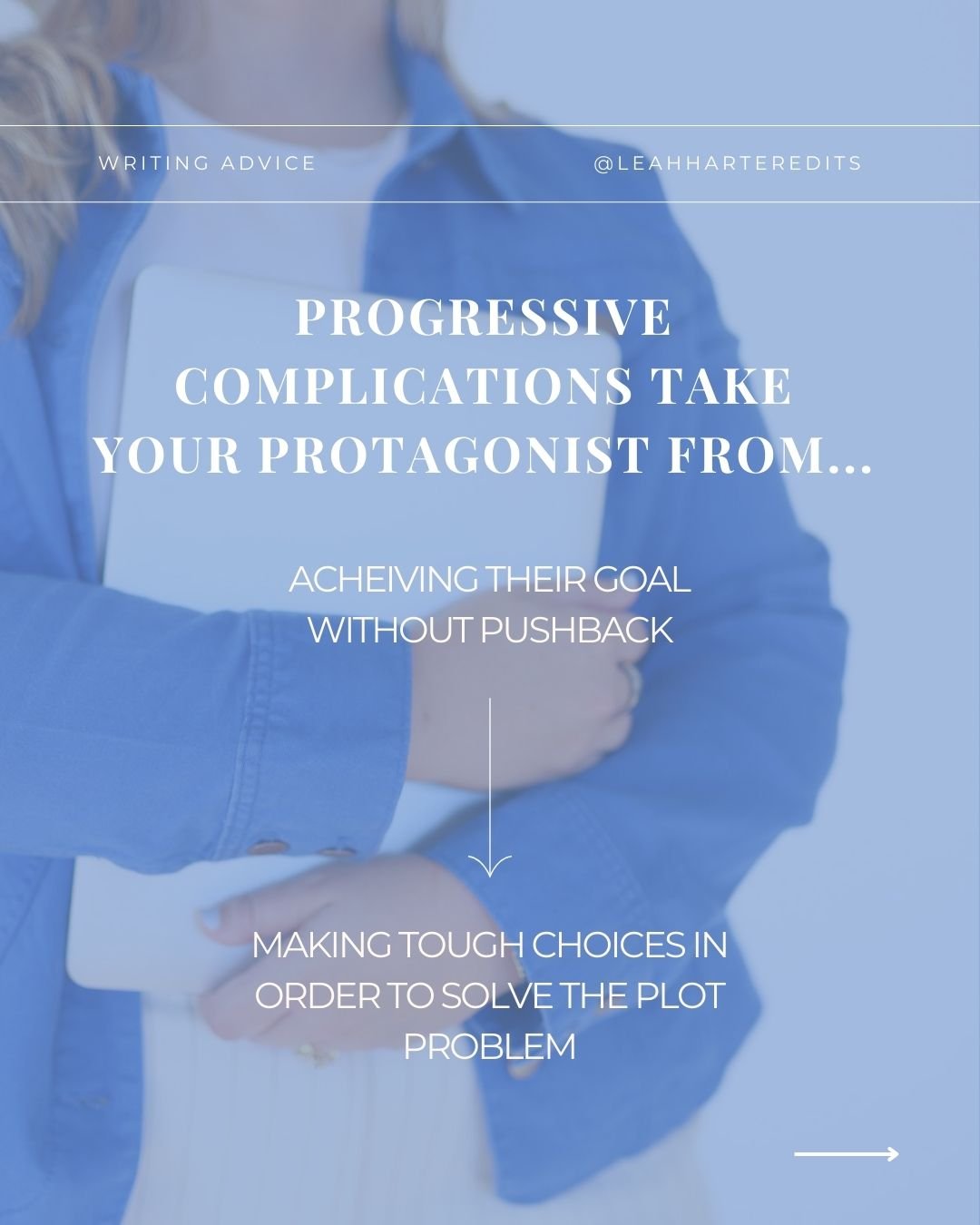
Every complication should force the character to decide under pressure. These choices show the reader what the character is willing to sacrifice in pursuit of their goal. Progressive Complications walk the journey from Inciting Incident to Turning Point by forcing your protagonist to expend all options. Often, characters will avoid giving up the thing they want most until they are forced to do so. Through this internal debate, your reader understands your protagonist's internal world and what they value.
The Difference Between Conflict and Complication
Conflict is the external problems that make up the plot. These can be individual plot points or extensive arcs of change, but they are external to the protagonist. A complication is how that problem escalates as the protagonist responds to external conflict. As your protagonist's moves through their story world, they make choices, use dialogue and external action to get what they want. Complications are the external stimuli that occur as a result of your protagonist's external action or through the pressure of the story world.
A story can contain conflict without forward motion if complications don’t meaningfully change the situation.
Progressive Complications and Rising Action
A progressive complication builds on what came before. Rather than resetting the story after each obstacle, it escalates the situation, removing options from your protagonist to get what they want and raising costs. This creates the feeling of mounting pressure, also known as Rising Action.
Your reader's understanding of the story world is based on previous context. As your character's face external events, your reader's understanding of what is possible in your story world changes. All conflict is measured against the previous events. For the stakes to be truly raised, the protagonist must face event greater consequences for their actions.
This keeps your reader engaged as the story builds towards a Climax that reaches the peak of the external conflict.
How Progressive Complications Escalates
Each progressive complication limits the protagonist’s options and increases what’s at stake. The character may succeed in the moment, but success creates new problems—problems that are harder to solve.
If your protagonist fails, that failure compounds as your forces of antagonism make it harder for them to succeed. This forces your reader to wonder how they story will end by creating a clear power divide between the protagonist and the antagonist.
Why “More Problems” Isn’t the Same as Higher Stakes
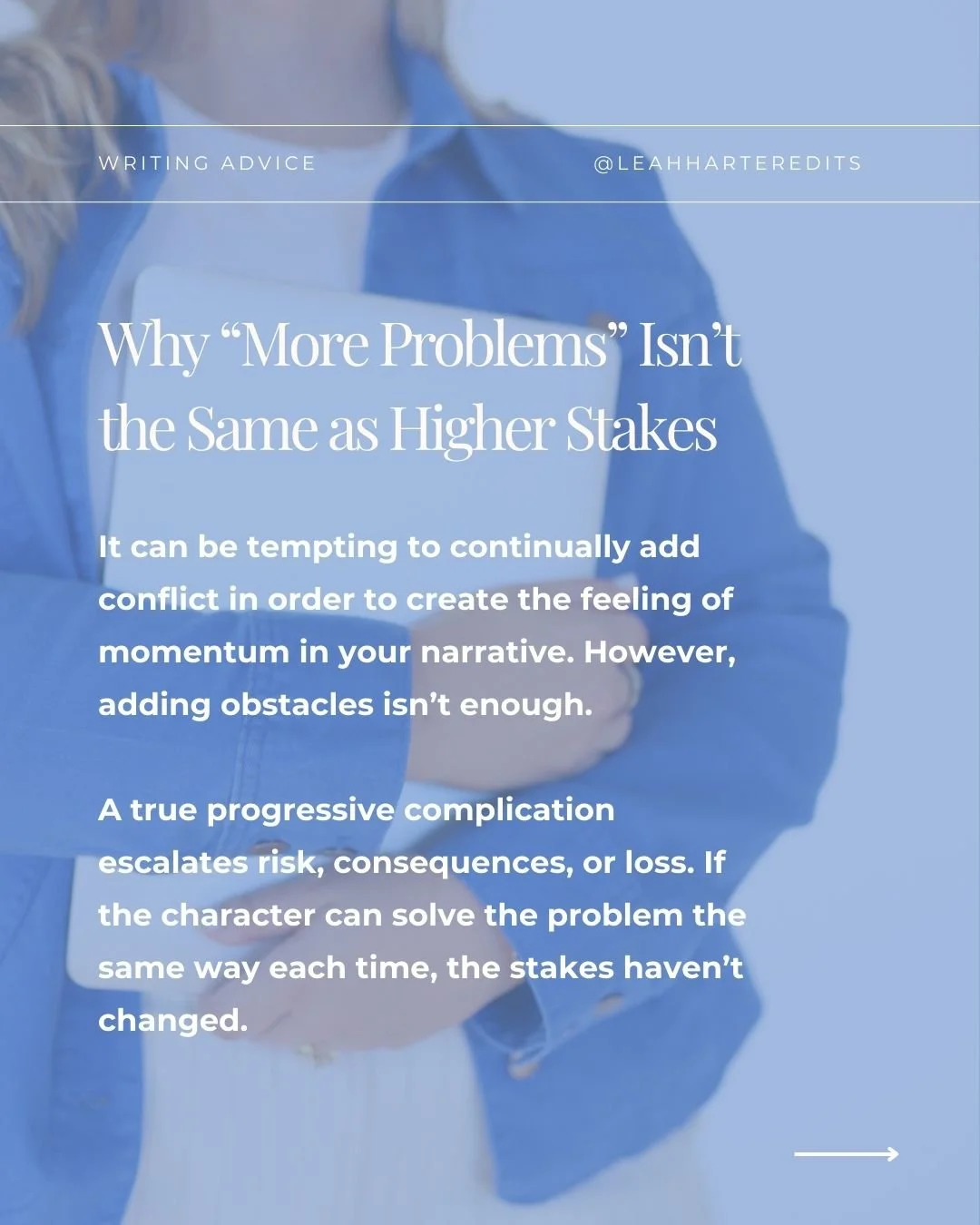
It can be tempting to continually add conflict in order to create the feeling of momentum in your narrative. However, adding obstacles isn’t enough. A true progressive complication escalates risk, consequences, or loss. If the character can solve the problem the same way each time, the stakes haven’t changed.
The Role of Complications in Story Structure
Complications propel stories forward by creating meaningful dilemma's that force the main character to prove who they are via their decisions. The story arc of your narrative is built on the choices your character faces. It's the job of your progressively complication to push your protagonist into the final moment when they are forced to make a decision.
The Five Commandments of Storytelling
The 5 Commandments of Storytelling is a part of the Story Grid Method. This is my favorite story structure method used to create a compelling narrative to the global story to every scene.
Initial Goal – Your scene starts with your Protagonist or Point of View Character's goal. This can be as simple as getting breakfast or as complicated as taking over the world.
1. Inciting Incident – An external force disrupts your character’s goal. This can either be a coincidence or intentional. This external force causes your protagonist to form a new goal.
New Goal – This is your character’s new goal based on the inciting incident. If they still have the same goal as the beginning of the scene, then they must want this goal in a new way.
Your Progressive Complications go here!
2. Turning Point – Character is presented with an equally weighed choice. This is the point of no return where your character must choose.
3. Crisis Question – The choice your character must make.
4. Climax – The choice your character makes. This can either be an action or a reveal. When your character makes a choice, it tells us who they are as a person and what they value. Climatic moment
5. Resolution – This is the result of your character’s choice.
Why Editors Look for Progressive Complications
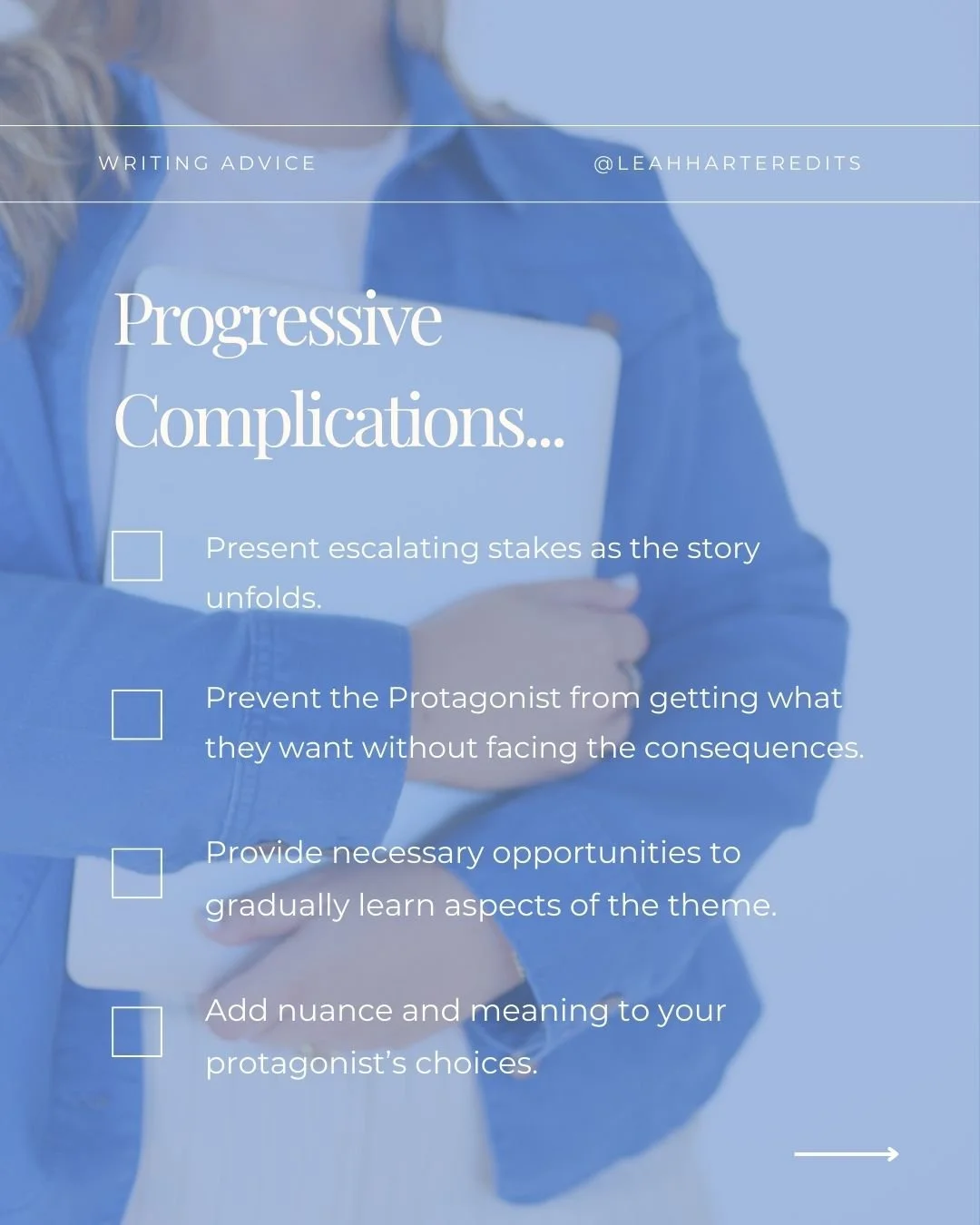
An editor reads for momentum. When a draft feels flat, the issue is often not a lack of conflict but a lack of escalation. If all of the dilemma's in your story are relatively equal in stakes, then the story will feel like the protagonist isn't facing greater and greater odds. For your reader, this creates a stagnate narrative that doesn't grab their attention.
What Editors Notice in Flat Drafts
It is the choices of your protagonist that create a value shift within your stories. Flat middles frequently feature similar complications repeated without a meaningful turning point. The protagonist acts, but the situation doesn’t meaningfully worsen or force them to consider new options.
When your protagonist doesn't face more intense, new conflict, it prevents value shifts from occurring. Your protagonist doesn't face new stakes externally or internally, which prevents them from learning the lesson the story's trying to teach them so that they can defeat their antagonist.
Progressive Complications as a Diagnostic Tool
Tracking each progressive complication allows editor (and writers) to see whether the story builds toward the climax or circles the same problem. In the beginning of the story, your protagonist faces the lowest level of complications. This gives you a baseline. From here, you can map all of the dilemma faced by your characters against this initial starting point. By the end of the story, your protagonist should face the highest stakes in their climactic moment where they will be forced to make decisions to resolve the external and internal conflict.
Conclusion: Raising the Stakes with Intention
In every story, progressive complications are what tests your protagonist. They escalate pressure, force decisions, and create momentum from the first disruption to the final resolution.
If a complication doesn’t escalate the situation, force a choice, or change the direction of the story, it may not belong. Raising the stakes isn’t about adding chaos—it’s about shaping consequence.
That’s all for now! For more writing tips and tricks, feel free to reach out to me or learn more on my Instagram below: