What Is a Copy Editor (and Do You Need One for Your Novel)?
Think of the times you or a friend have DNFed a novel.
Maybe you picked it up because you had read the author’s other books. Maybe it was recommended by a friend, or maybe you liked the cover.
That’s why you started reading it.
Why’d you stop?
Was it because you didn’t like the main characters? Was it too long or too slow?
Maybe it was a smaller issue.
You noticed it mentioned a highway exit in your hometown, but that exit doesn’t exist, and the setting wasn’t otherwise fictionalized. Maybe the story was set in the UK but used US English words like “diaper” or “sidewalk,” or maybe it was the rarer case: a British author writing about school “marks” in a novel set in Vermont. Maybe it was something very mechanical, such as inconsistent capitalization or punctuation use.
With the rise of self-publishing, many more authors can write so many wonderful stories. Indie authors also handle (or hire someone to handle) all the other prepublication tasks, such as formatting, cover design, blurb writing, and building an ARC team.
While indie authors handle all that, copy editors help them grow their future readership by finding as many of those DNFable points as possible before it’s too late.
What Does a Copy Editor Actually Do?
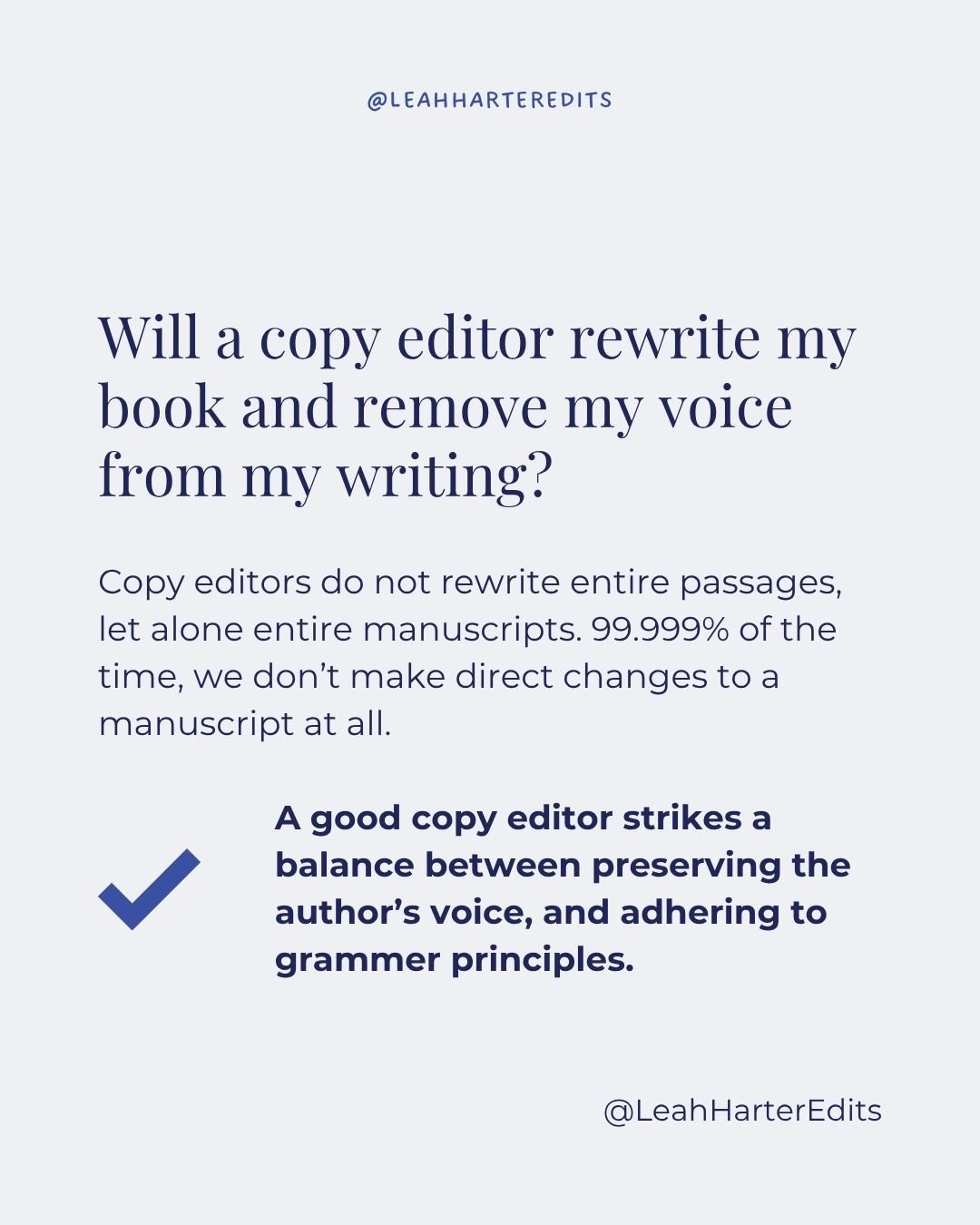
Copy editing is a type of editing, which means it involves making suggestions to a writer about how the piece of writing could be a better (clearer, more professionally presented, or more impactful) reading experience. Like all types or levels of editing, copy editing is not ghostwriting or copy writing. Copy editors do not rewrite entire passages, let alone entire manuscripts. 99.999% of the time, we don’t make direct changes to a manuscript at all. (The one exception is to implement the mass standardization of a mechanical change, such as double to single spacing after a period, that would clutter the document if put in as individual tracked suggestions. This is always done with a note seeking the writer’s approval.)
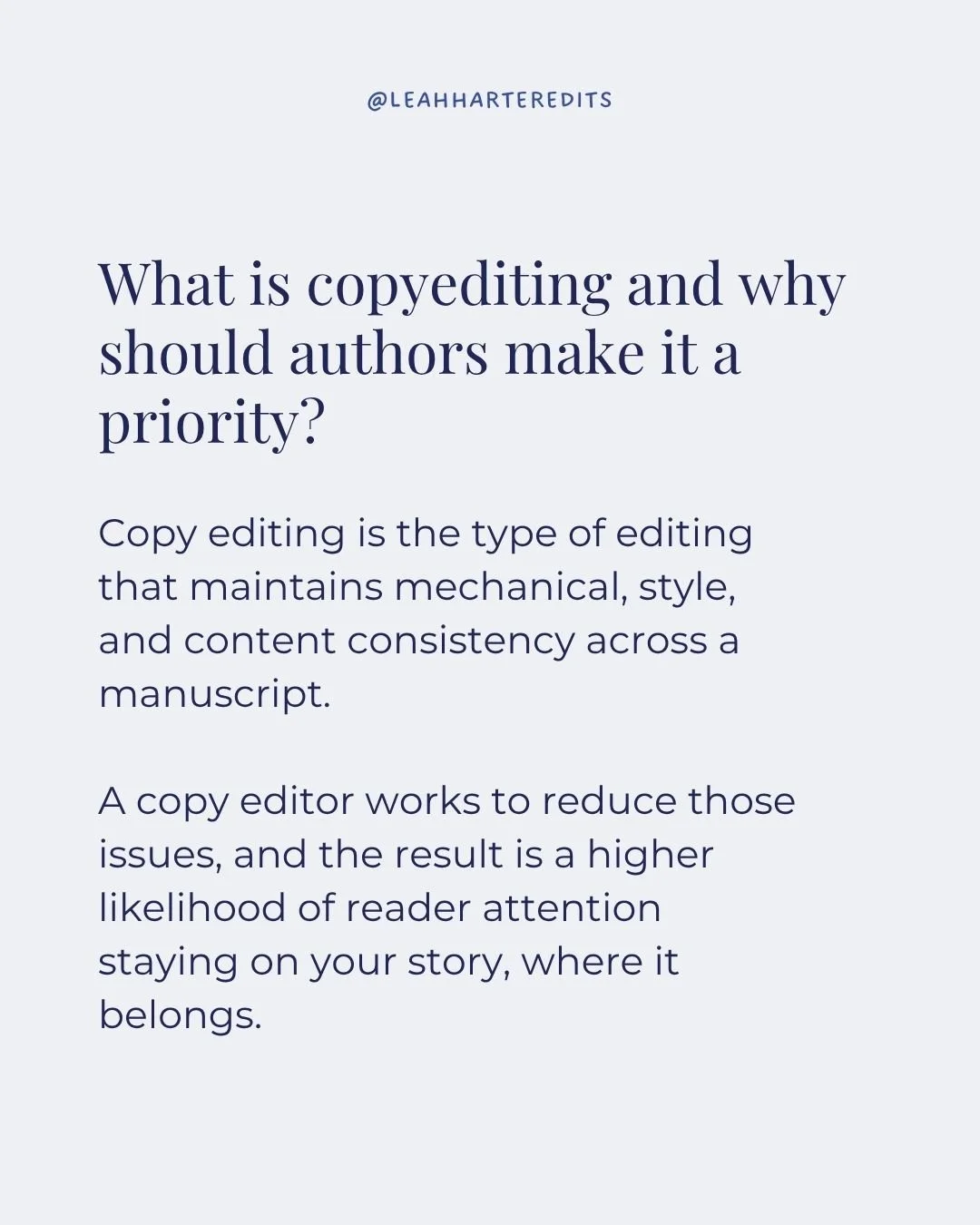
Copy editing is the type of editing that maintains mechanical, style, and content consistency across a manuscript. For fiction copy editing, this internal consistency concerns worldbuilding details and whether the prose describes actions in ways that follow logically from the rules of the storyworld. Copy editing is the editorial level that sets the standard for how the manuscript’s prose looks on the page while monitoring how that prose creates a logical story at the level of close-up detail.
Anything that could be potentially inconsistent within the manuscript at the prose level—terminal comma use, character hair color, how many moons the sci-fi planet has, hyphenation, what substance a character can smoke from a pipe in twelfth century England, and other details of this kind—must be tracked by the copy editor.
As the author, are you unsure of how you’ll remember the spellings of the names of your side characters across the next books of your series? Hire a copy editor, and we’ll keep track of that for you. Copy editors create a style sheet to record both these style points and all the character, plot, and worldbuilding details that could be inconsistent at any point in your manuscript. We refer back to it as we edit.
A copy editor handles a manuscript’s grammar and punctuation based on striking a balance between preserving the author’s voice and adhering to standard editorial styles.
How does a copy editor approach a manuscript?
In general with fiction, copy editors take a lighter approach to dialogue than they do to narration. Dialogue reflects not only the author’s general voice but the particular voice of the characters, so more leeway is given on syntax and punctuation.
Copy editors use two main types of reference materials in their work: the standard dictionary for the language and dialect they are editing in and a general style manual for the country/type of prose they are working with. For fiction published in the United States, the style guide is the Chicago Manual of Style, and the standard dictionary is Merriam-Webster. Both of these reference sources get listed, in the edition used, on the manuscript’s style sheet.
The two other major responsibilities of the copy editor are checking for any copyrighted material within the manuscript and a light form of sensitivity reading that checks whether there is any language in the manuscript that denigrates or belittles a non-default group. That means anything in narration that’s racist, sexist, ableist, xenophobic, homophobic, or transphobic.
These last two aspects of the job show again that the copy editor is dealing with the manuscript’s prose at the border of strict mechanics and meaning, identifying any points of concern for the author to handle.
What is the difference between copy editing and other types of editing?
As the level of editing that deals with how consistent the prose’s mechanical style and the story details are, copy editing does not provide feedback about character arcs, plotting, or narrative tension.
Developmental editing works with those “big picture” elements of a manuscript to assist the writer in crafting a story that will enthrall readers. It’s the first, most crucial type of feedback.
Once the developmental feedback has been incorporated so that the story itself is in its final form, a manuscript is ready for prose-level editing.
Copy editing is the more mechanical/rule-bound type of prose-level editing. It can be combined with or done after the other type, line editing.
Line editing focuses on the prosody and rhythm of the prose at the paragraph and sentence-by-sentence level. It follows on from the plot structure analysis of developmental editing by examining how the story “sounds” to the reading mind.
Once that prosody has been attended to, the focus can move to consistency and more mechanical issues.
Copy editing is not proofreading
The two final editorial services on the road to publication both focus on spelling, grammar, and punctuation. Copy editing actively sets the standard for a manuscript by creating a style sheet from general style guides and the author’s preferences, as described above. Proofreading uses that established guide to perform the most mechanical check of all. Proofreaders are yet another pair of eyes on the pre-publication manuscript, but they only implement the decisions already made. They may catch any last inconsistencies and bring them to the author’s attention in a note in the right hand margin called a query, but this is uncommon if the manuscript received a thorough copy edit.
Is there a difference between copyediting fiction and nonfiction?
The style guides that copy editors use, such as the Chicago Manual of Style, were written for nonfiction texts.
However, the CMOS has created a Fiction+ section for its Shop Talk blog to give editorial guidance to fiction writers and editors. Copy editing of fiction involves a welcoming sensitivity to the author’s creative decisions in grammar and punctuation, such as deliberately using comma splices in dialogue. The Fiction+ post on comma splices notes that Charles Dickens’s famous first line in A Tale of Two Cities is a run-on sentence spliced together with commas.
What to Look for When Hiring a Copy Editor
Most indie authors will hire freelance copy editors, who each charge their own rates. The Editorial Freelancers Association (EFA), the largest professional organization for freelance editors in the US, publishes a rate chart based on the median rates its members charge in their businesses.
Some copy editors charge by the hour, some offer a tailored project quote, and some charge per word. Some legitimate editors may choose to charge a flat untailored price for each type of editorial service. Beware, however, that scammers may also put forward flat rates of this kind.
So how do you try to make sure you aren’t being taken in by a scammer?
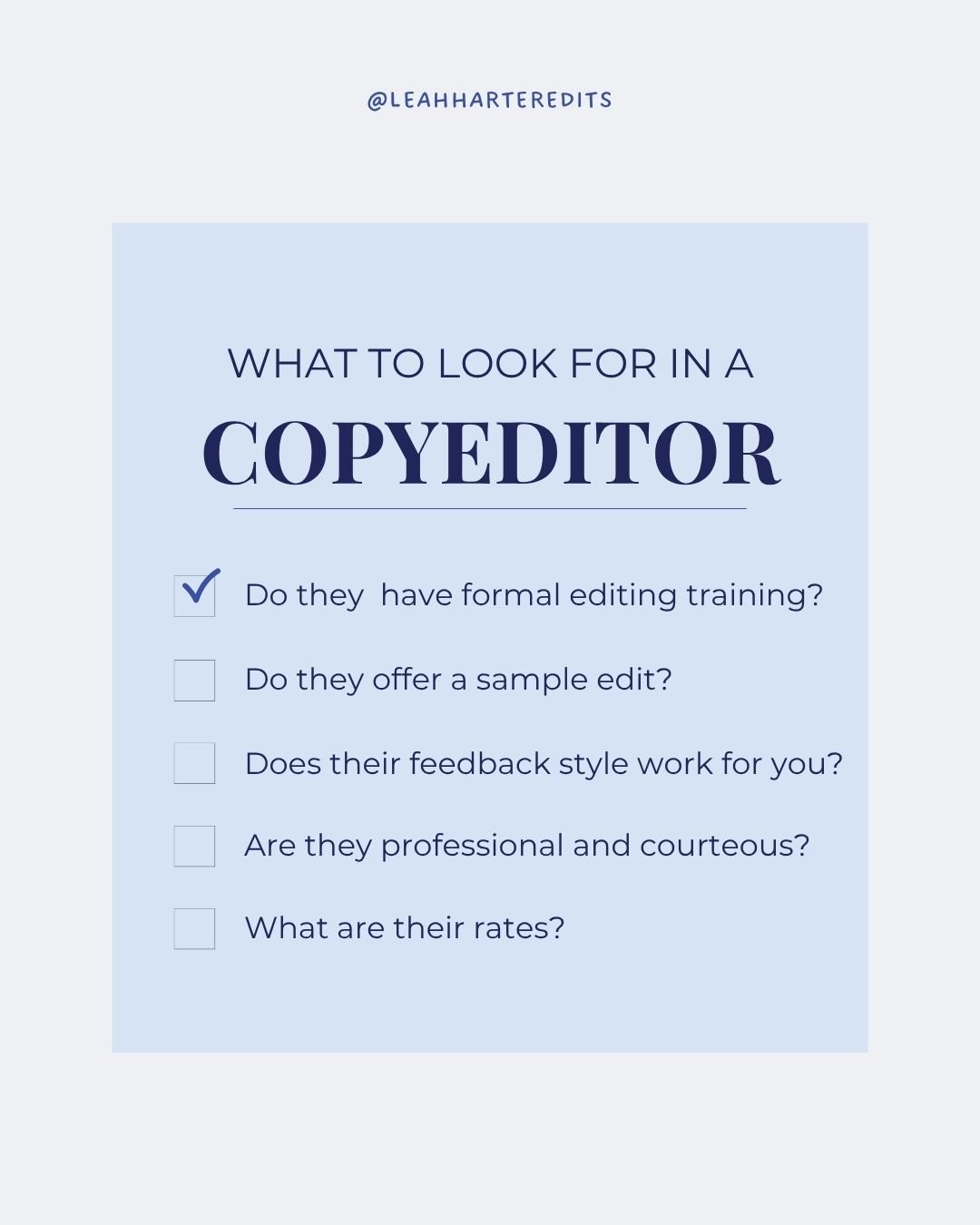
Nothing is a guarantee, but the biggest green flag to check for is whether the person has formal editorial training from a reputable institution in the type of editorial service they’re offering.
As a professional association, the EFA offers training courses on the different types of fiction editing for people entering the editorial industry. The UK’s professional organization for editors, the Chartered Institute of Editing and Proofreading (CIEP), also offers excellent courses. Editors Canada offers a test of editorial skills in addition to great professional certification courses.
Club Ed and Liminal Pages are two other reputable places that offer copy editing training. Liminal Pages is run by a UK-based fiction editor, and the courses focus on the levels of editing for fiction. The University of California, San Diego offers an online copy editing certificate program, as do a few other US universities.
Training and Sample Edits
The next biggest sign of legitimacy is an offer of a sample edit; at the very least, the copy editor you’re considering should be open to doing one. Many copy editors, myself included, offer them for free.
A sample edit is essentially what it sounds like: you give the editor a Word or Google Docs file with a sample of your manuscript, the editor edits it in either Tracked Changes or Suggest mode just as they would with a full manuscript, and then they send it back to you for your evaluation of their editorial style. Different editors may have specific requests for the sample edit; I request one thousand words from the 50% mark, for example, since the middle of the manuscript tends to receive less sentence-level polish before a copy edit.
When you get each sample back, review the suggestions. Do you think they’re helpful? Do they help the reader move through the sentences the way you’d like them to? Then accept them. Are the queries about inconsistencies in character and worldbuilding detail best answered by “Yes, I meant to do that, and I’d like to keep it that way”? You can and should reject suggestions that you think would not serve your story.
Then evaluate the editor’s style of feedback: were they straight to the point, focused on the grammar mechanics and the continuity of your details, or did they also leave notes about aspects of your writing they thought were good? We’re taught that leaving some unambiguously good feedback is good practice, and we do this work because we want to build authors up, but each editor does it differently.
What kind of feedback style do you want from your editor?
I describe my own style as “lovable schoolmarm,” and I’ve been called “no-nonsense.” When I give a positive margin comment, it’s because I think something is intensely good. Other editors have less-reserved styles.
See what works for you and your story before you hire someone.
Is a Copy Editor Worth It?
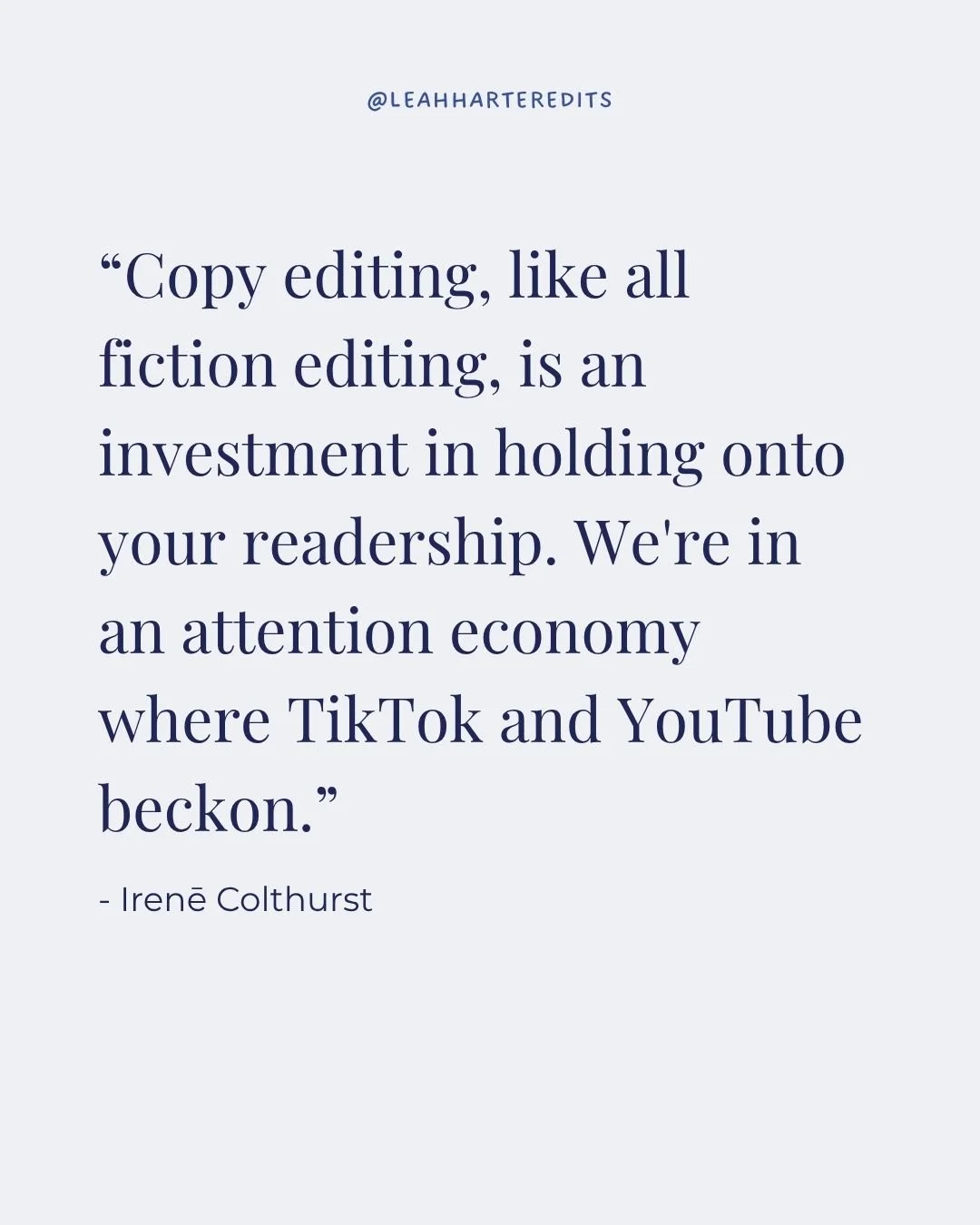
Copy editing, like all fiction editing, is an investment in holding onto your readership. We’re in an attention economy where TikTok and YouTube beckon. Copy editing is distraction insurance for your story.
Once the story elements are solid and combined into a well-paced narrative, issues with the prose are the next biggest cause of readers losing interest in a novel.
A copy editor works to reduce those issues, and the result is a higher likelihood of reader attention staying on your story, where it belongs.
Make sure the editor you hire has credible training, and make sure you like their editing style.
When you’ve found a copy editor you click with, your story will shine. Readers will hold onto it, and you’ll hold onto them.
Editor’s Note:
Thank you so much to Irenē for sharing her knowledge of copy editing with us. Her practical breakdown of this editing service was both illuminating and education. I’m so excited to share it with you.
If you’re a new author wondering how to take your book from draft to publication, you’re in the right place. My email inbox is always open.
All the best,
Leah